Residential Roof Waterproofing & Coating
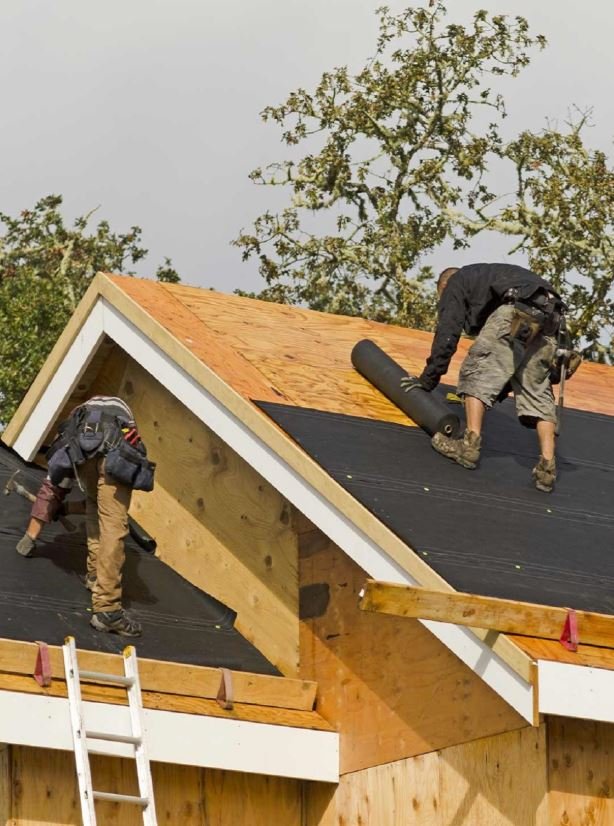
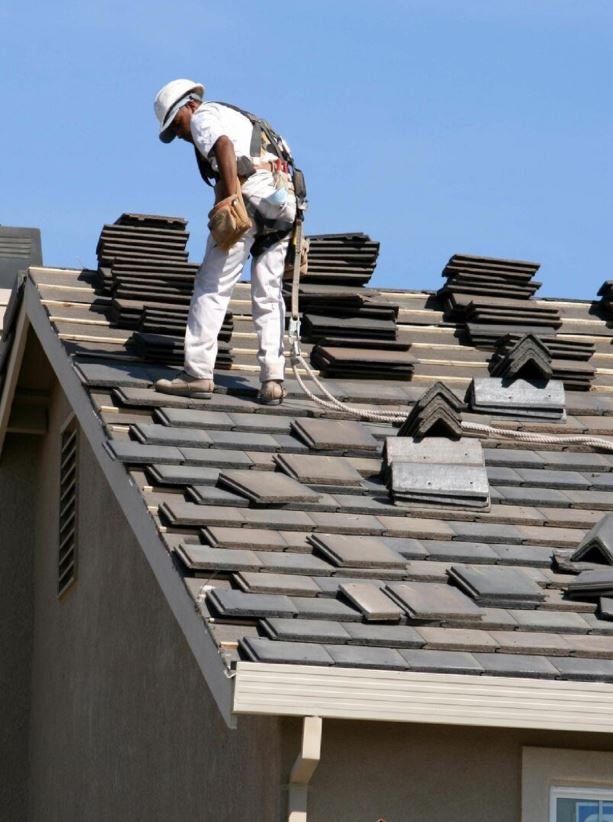
Not every part of a house is protected by shingles. The flat garage roof, the kitchen addition, the balcony deck, and the low-slope dormer shed water too slowly for shingles to work, and those areas leak first on an Alberta home. Markit Roofing handles residential roof waterproofing on these sections across Calgary and Edmonton with seamless fluid-applied and membrane systems.
Where shingles rely on gravity, a flat surface needs a continuous barrier with no seams for water to find. We coat and seal the parts of your home standard roofing cannot, bonding directly over the existing surface so there is no tear-off. If your main sloped roof needs work instead, that is a residential roof replacement. Book your waterproofing assessment today.
The Flat Areas That Let Water Into Your Home
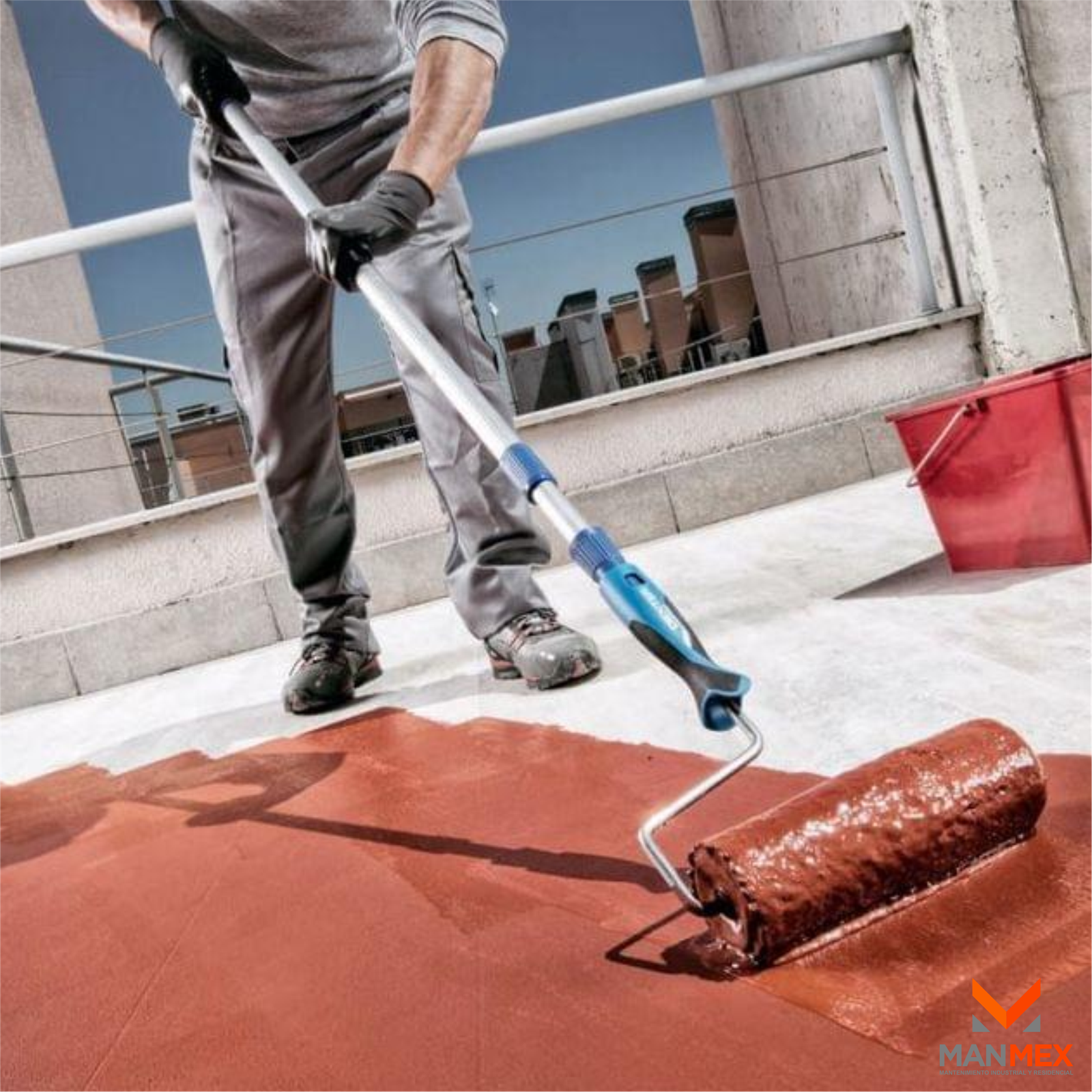
The trouble spots are always the same: the places where a flat or nearly flat surface meets the rest of the house. Water that would run straight off a steep roof instead sits and works its way in wherever the pitch drops below what shingles need to drain. These are the parts of an Alberta home our residential roof waterproofing is most often called to.
- Flat garage and shed roofs
- Additions and extensions
- Balconies and deck surfaces
- Low-slope dormers and bays
- Over-porch and bay roofs
Each of these sits below the slope shingles need to shed water reliably, which is exactly why they fail. A coating or membrane turns that slow-draining surface into a sealed, watertight one. We assess which system suits each area because a balcony that handles foot traffic needs a different build from a garage roof that only handles weather.
Our Home Waterproofing Process
Check and Test the Surface
The first visit is about whether the surface is even a candidate. We probe the deck for soft spots and concealed rot, run an adhesion test on the existing finish, and read the moisture level, since a fluid system seals in whatever it covers, and there is no undoing that afterward.
This matters more on a home than owners expect. If a garage deck is already saturated, a residential roof inspection with moisture scanning confirms it, because coating over trapped water only rots the wood from below. Where we find that, we deal with the wet deck first rather than sealing the damage out of sight.
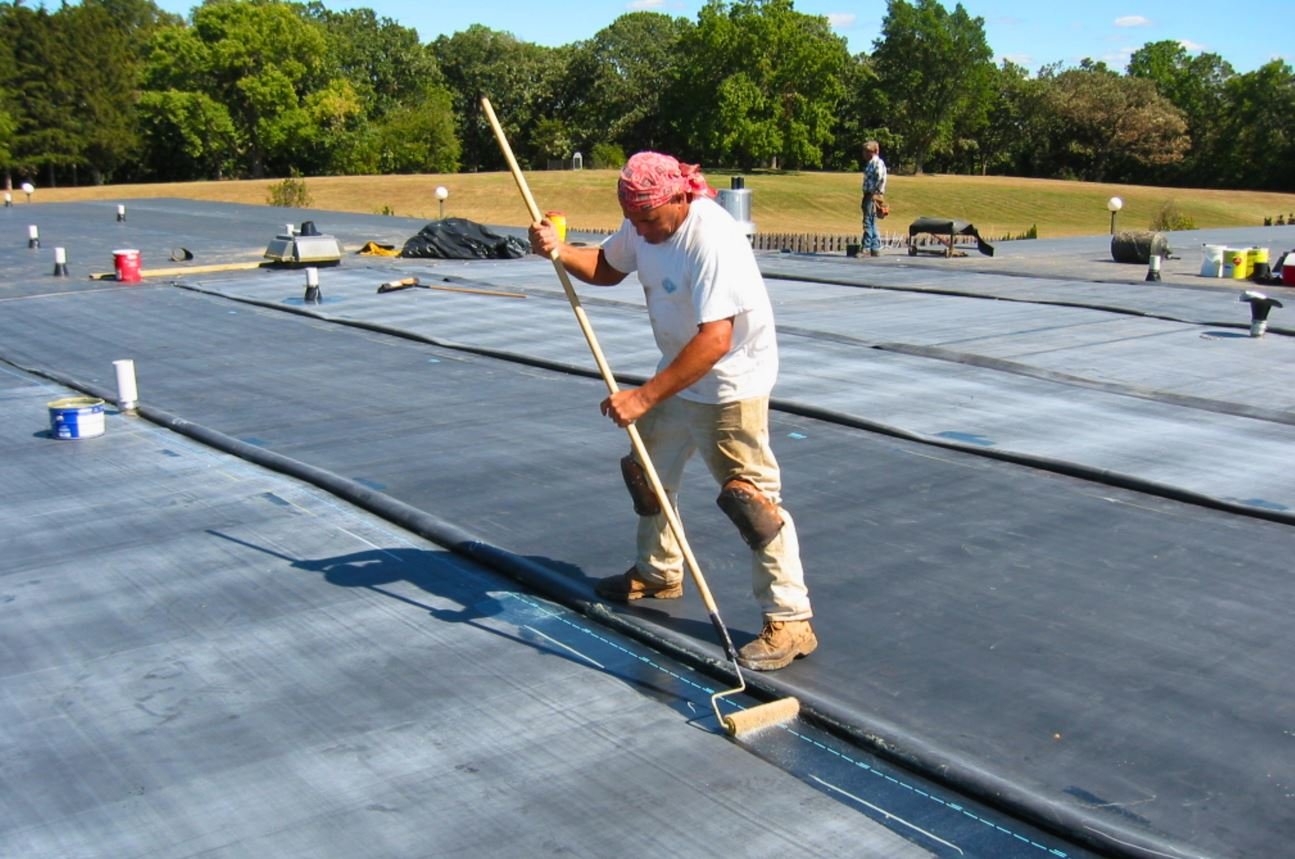
Prepare and Prime the Deck
Everything rests on the substrate underneath, so the prep stage carries most of the labor. We scrub the area back to sound material, lifting off dirt, chalk, moss, and anything loose or already failed, then leave it to dry right through. A weathered or bare deck gets a primer coat so the system keys in for good.
Preparation is also where corners get cut, and it is the single most common reason a coating fails early. We do not rush it. A properly cleaned, dry, and primed surface allows a fluid-applied system to bond as a single continuous film rather than lifting at the edges during the first winter.
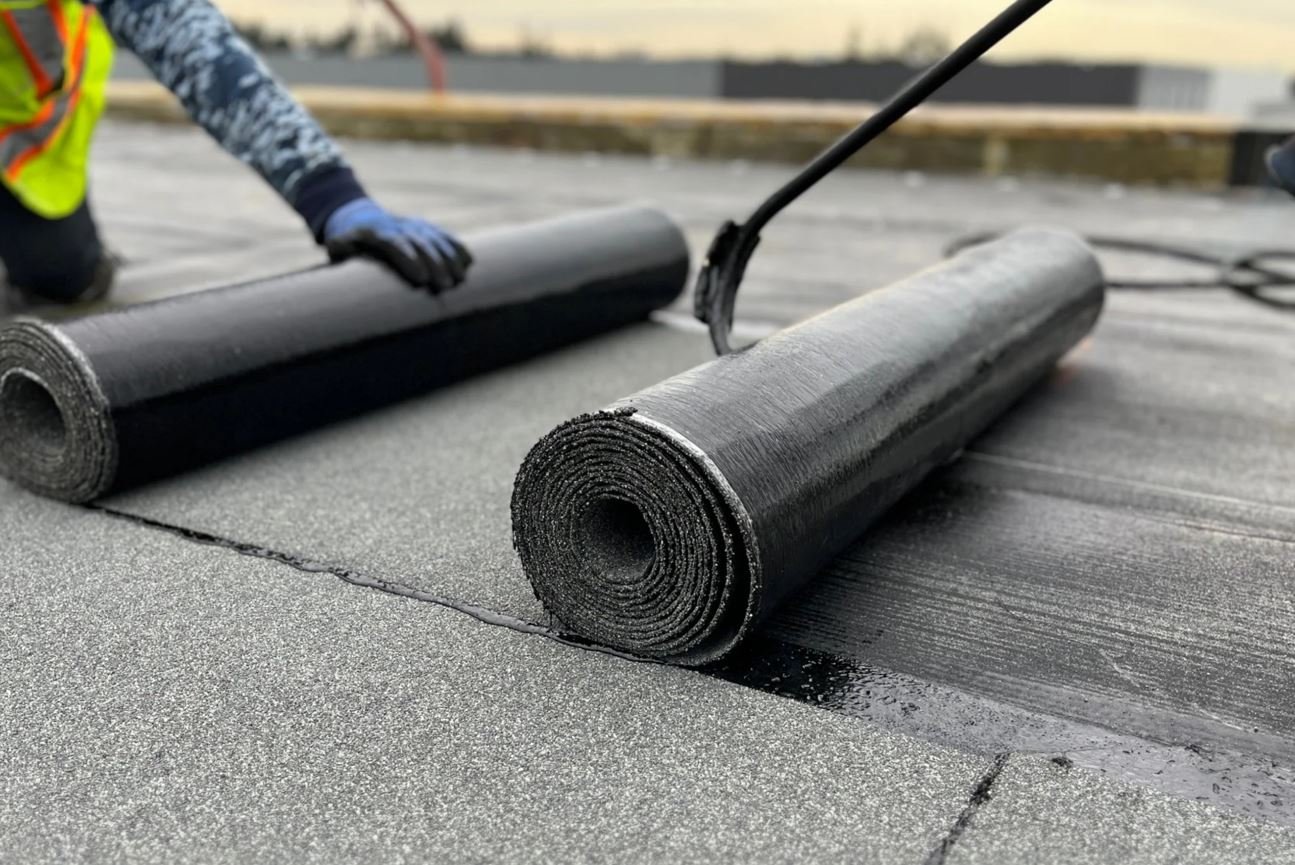
Reinforce the Weak Details
A coating or membrane gives way at the details long before the open field does, so every weak point is reinforced ahead of the main surface. Seams, edges, drains, and penetrations are bedded into reinforcing fabric and a detailing coat, since those transitions carry the most movement and water probes them first.
On a house that means close work at the wall junctions, at the flashing where a flat run meets the sloped roof above it, and around any railing post punched through a balcony deck. Handle those transitions first, and the cured field coat is left with nothing weak to open along later.
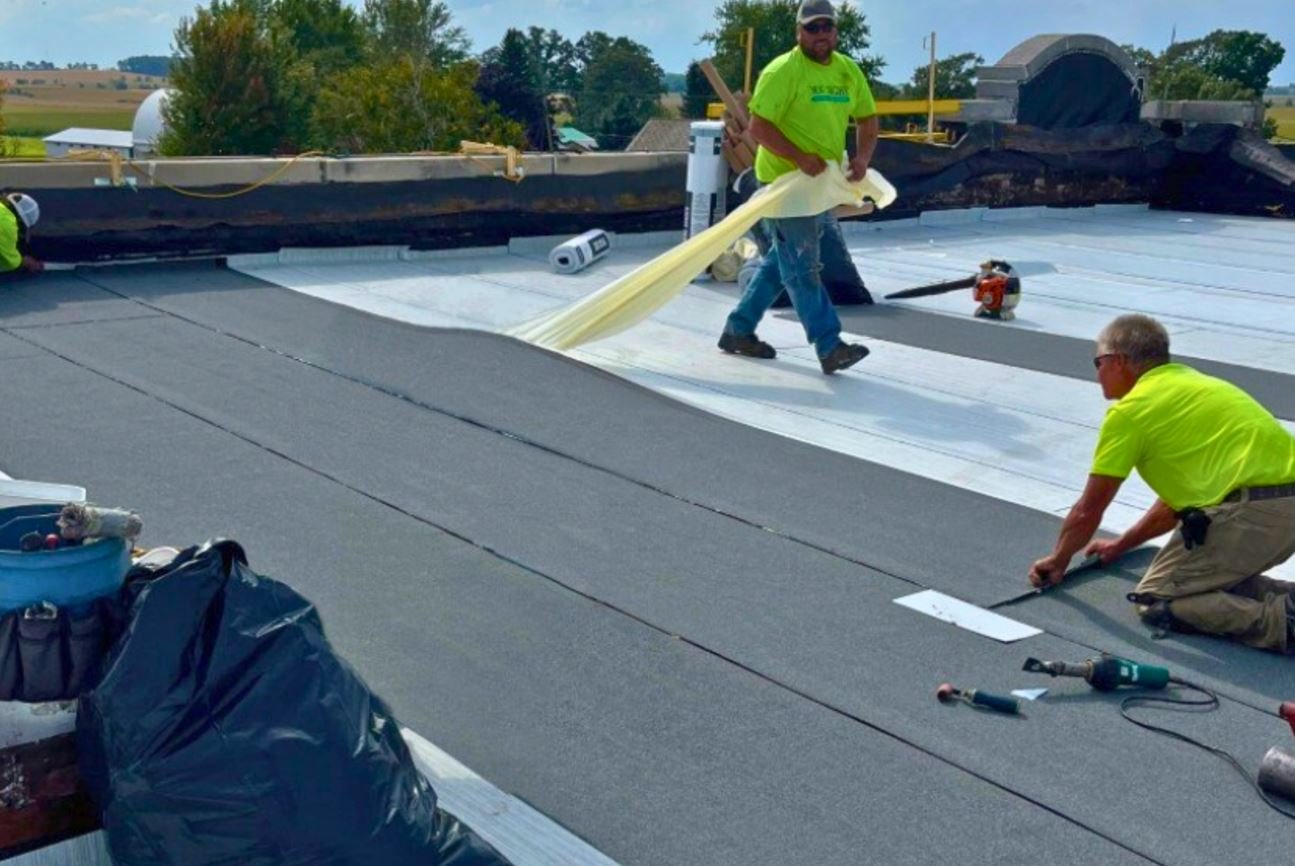
Apply the Seamless Coating
Once the detailing has cured, the field coat or membrane is applied across the entire area to the thickness specified by the manufacturer. Fluid products are laid in measured passes, and we gauge the wet-film depth on each pass so the finished skin builds to full strength rather than ending up starved and thin.
We work to the temperature and cure windows the product needs, which in Alberta often means watching overnight lows as closely as daytime highs. Once cured, the surface is a single seamless membrane with no joints to fail, sealed against the freeze-thaw cycles the season brings.
Have a new roofing project?
Waterproofing Systems We Apply on Alberta Homes
Liquid rubber and acrylic coatings are the versatile choice for flat and low-slope home sections. Laid on far thicker than any paint, they flex and spring back with the surface as it heats and cools day to day, spanning fine cracks and closing the area off to water. Acrylic dries to a bright white that can drop the surface temperature by 30 degrees in summer, and both go straight onto a sound existing surface. We use them on garage roofs, additions, and porch roofs where a seamless, renewable barrier is needed to keep the area dry through Alberta’s swings.
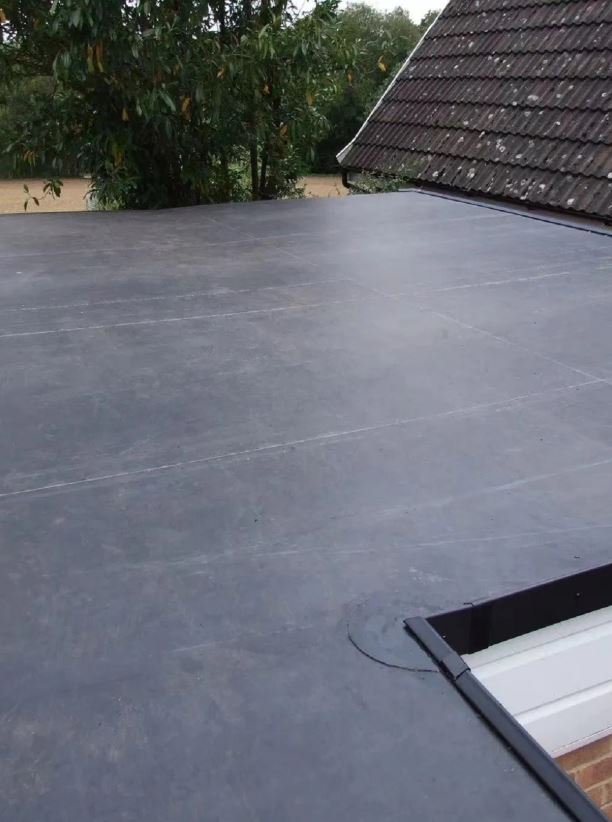
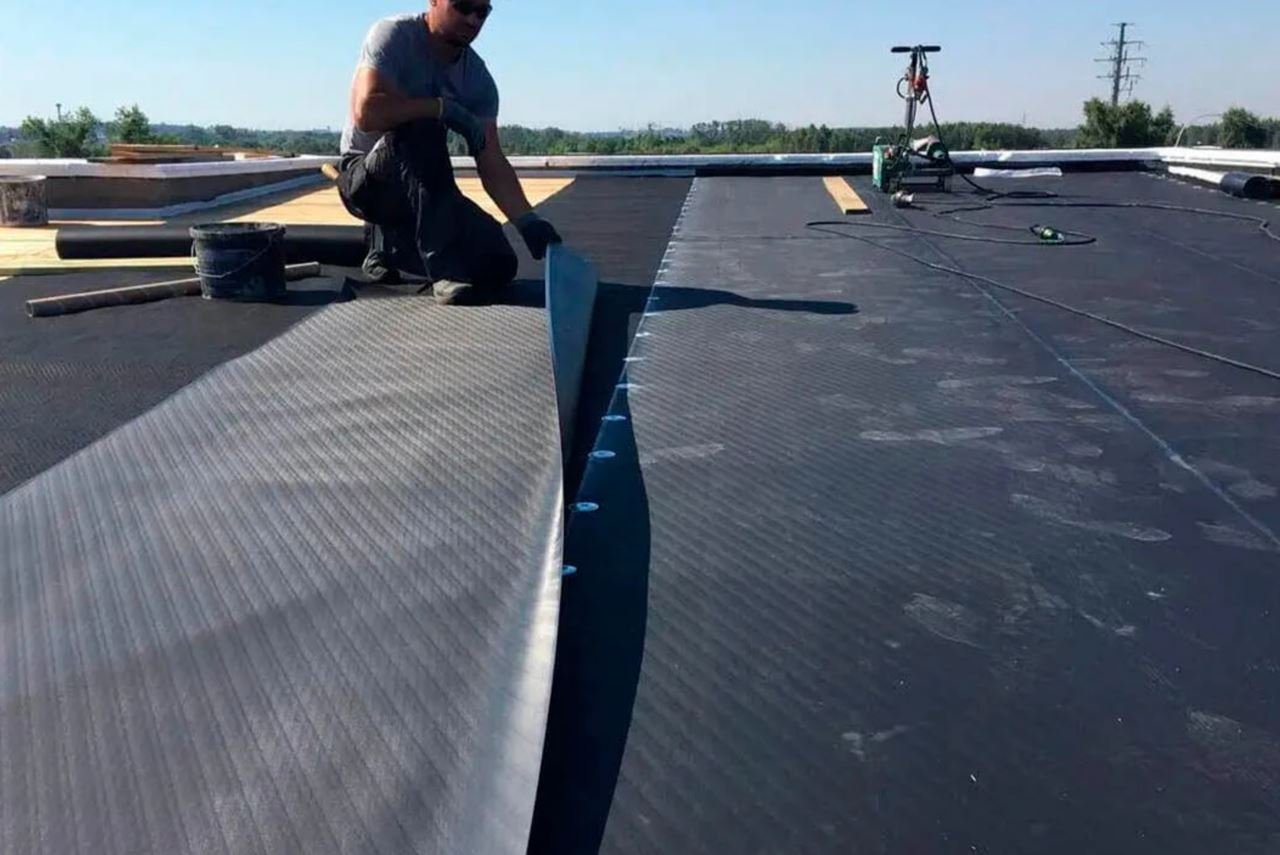
EPDM is a synthetic rubber membrane that has protected flat roofs for 40 years and more, and it suits the low-slope sections of a home well. Supplied in large sheets, it is laid to minimize seams and bonds into a continuous, flexible barrier that handles Alberta’s sharp freeze-thaw cycling without cracking or going brittle. It is an excellent fit for a detached garage, a flat-roofed addition, or a carport, where its long service life and low upkeep make it a dependable, value-driven choice that keeps water out year after year.
Silicone coatings earn their place wherever water tends to pool, which on a home means the low garage roof or the addition where drainage was never right. Where acrylic softens under water that never leaves, silicone does not, so it keeps its seal in the very hollows where meltwater and rain sit longest. It shrugs off UV and stays supple for years, typically 10 to 15 years between recoats. The one trade-off is that it gets slippery when wet and holds dirt, so on any surface that sees foot traffic we broadcast grit into it at the time of application for grip.
A balcony or deck is a roof over whatever sits below it, and it takes foot traffic as well as weather, which is why it needs a purpose-built system rather than a plain coat. We lay a tough, walkable membrane detailed around railing posts, thresholds, and drains, the exact points where deck waterproofing tends to fail. When done properly, the surface stays watertight and comfortable underfoot, protecting the living space, entryway, or storage below it from the slow, hidden water damage that a leaking deck can cause.
Why Our Waterproofing Lasts on Alberta Homes
Residential roof waterproofing is a distinct trade, separate from shingle work, and it is where many general roofers come unstuck. Markit Roofing applies fluid and membrane systems to the parts of your Calgary or Edmonton home that shingles cannot protect, and we treat those small areas to the same standard as a full roof, because a leaking garage or balcony damages the living space below just as surely.
Applied to Suit the Surface
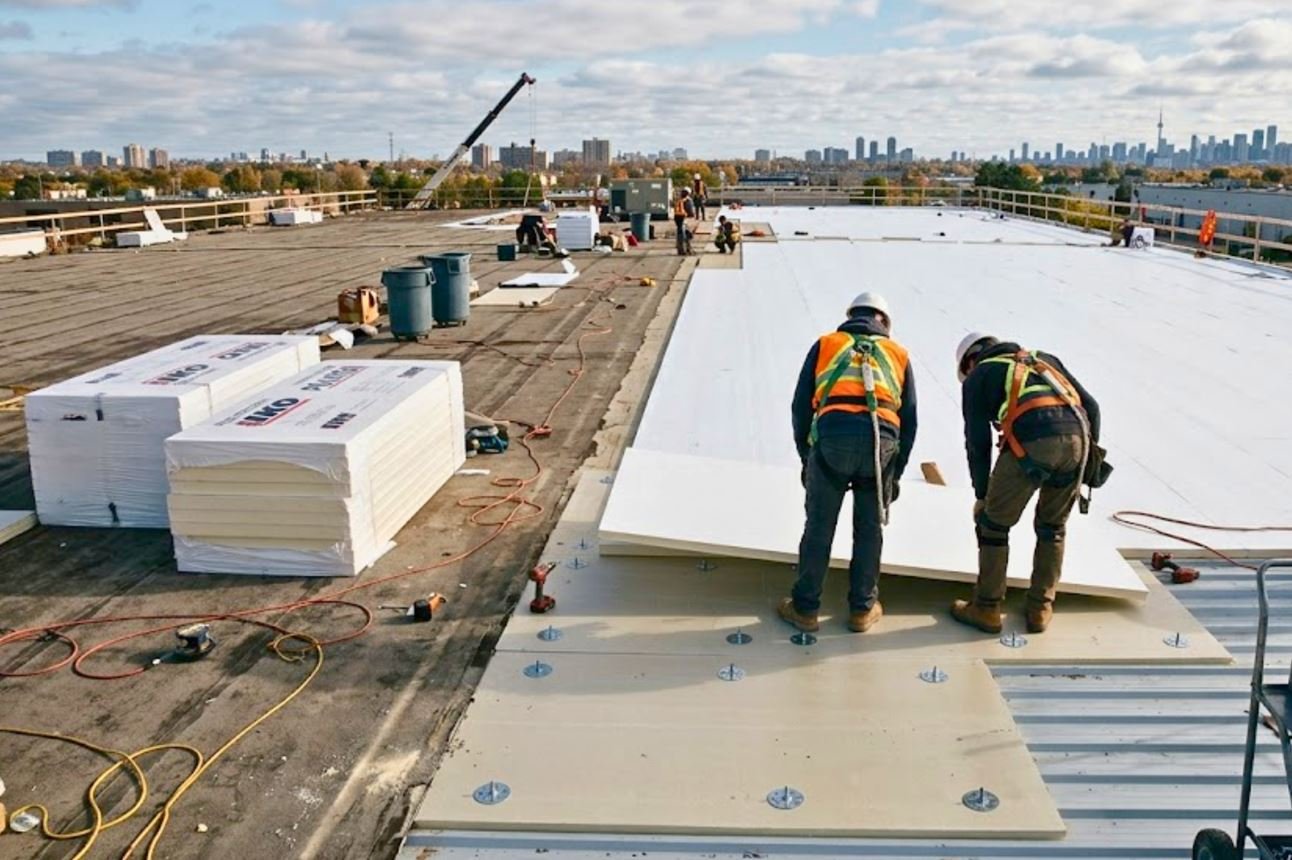
The commonest cause of a failed coating is not the product; it is the wrong product on the wrong surface. Acrylic breaks down in standing water; silicone gets slippery on a deck; a membrane suits a garage roof better than a coating. We match the system to how each area actually drains and gets used, which is why our waterproofing keeps sealing where a one-size approach would have peeled or ponded.
No Tear-Off Roof Restoration
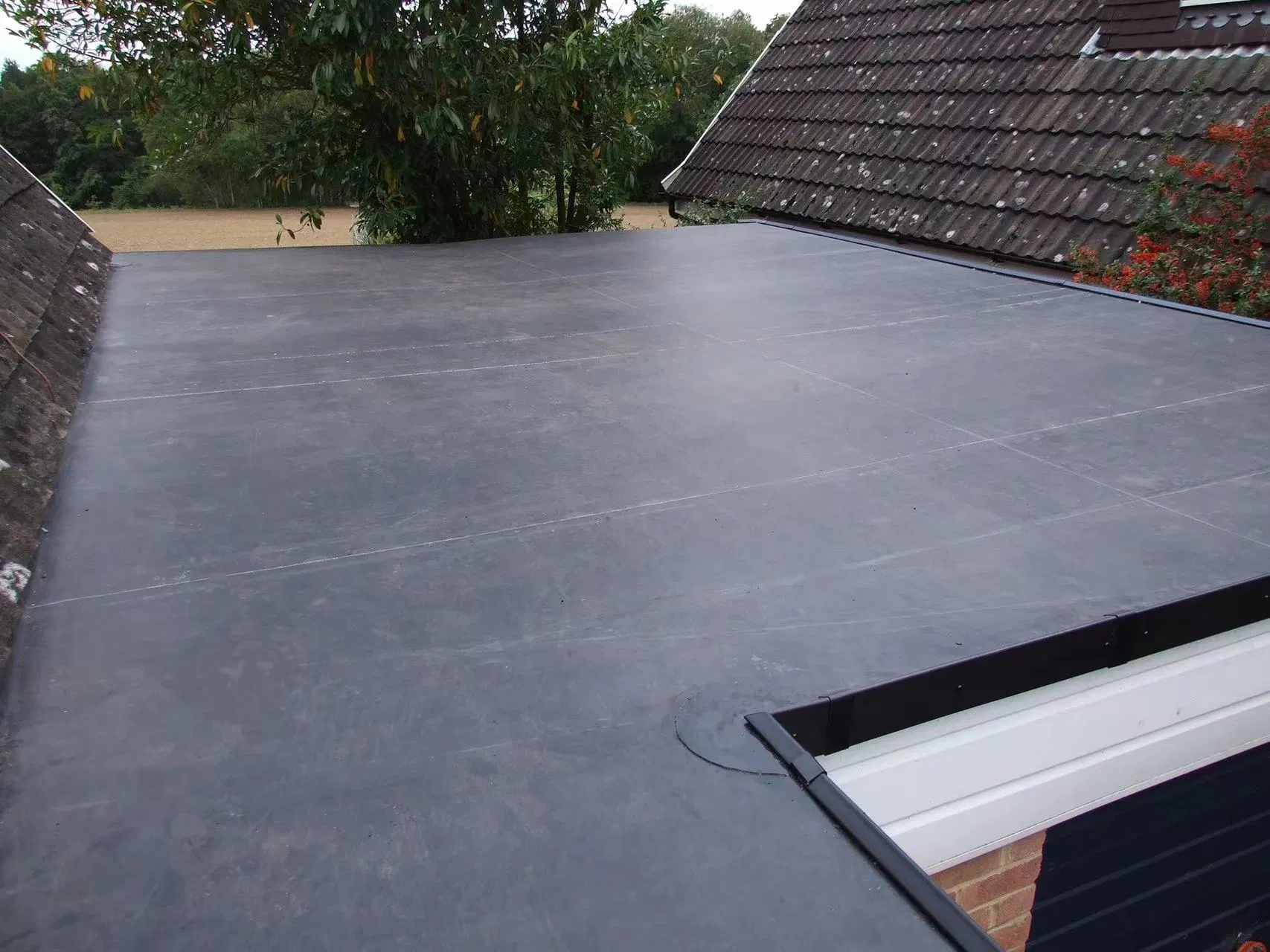
Restoring a flat section this way entirely skips the upheaval of a tear-off. Nothing gets ripped up, the structure never sits exposed, and no loaded skip blocks your driveway; the system goes on over what is already there. The garage stays in use, the balcony stays put, and the surface you already own gets years of extra life rather than an early and costly rebuild.
Seamless Watertight Finish
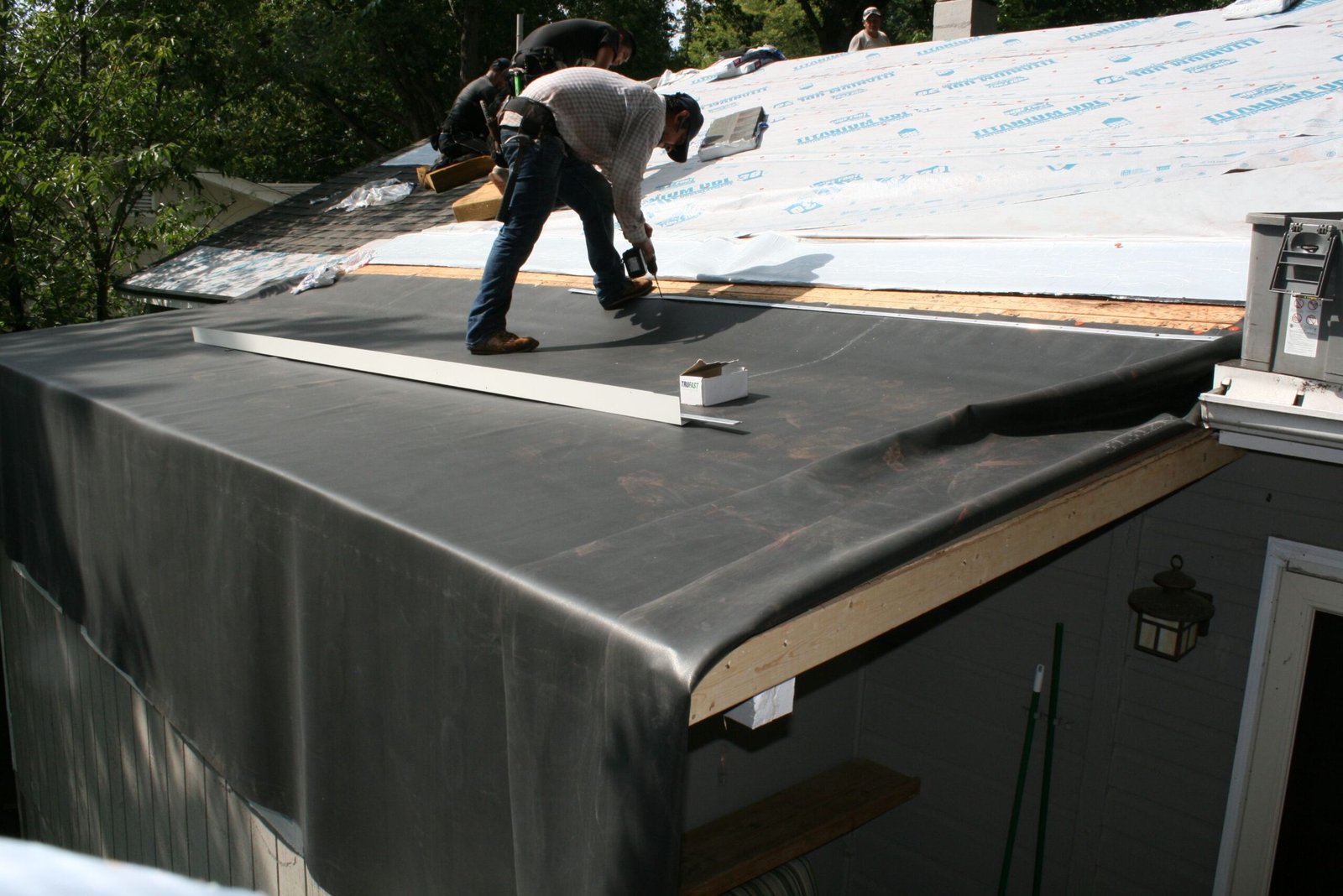
What we put down sets into a single, unbroken skin with no laps or joints. Being poured rather than rolled out in sheets, it runs into every corner and wraps every penetration as one piece, which is precisely why it copes so well with the fiddly, detail-heavy flat spots on a house. A skin with no edge gives water nothing to creep under, so it holds where a seamed sheet would eventually part.
Built for Alberta Freeze-Thaw
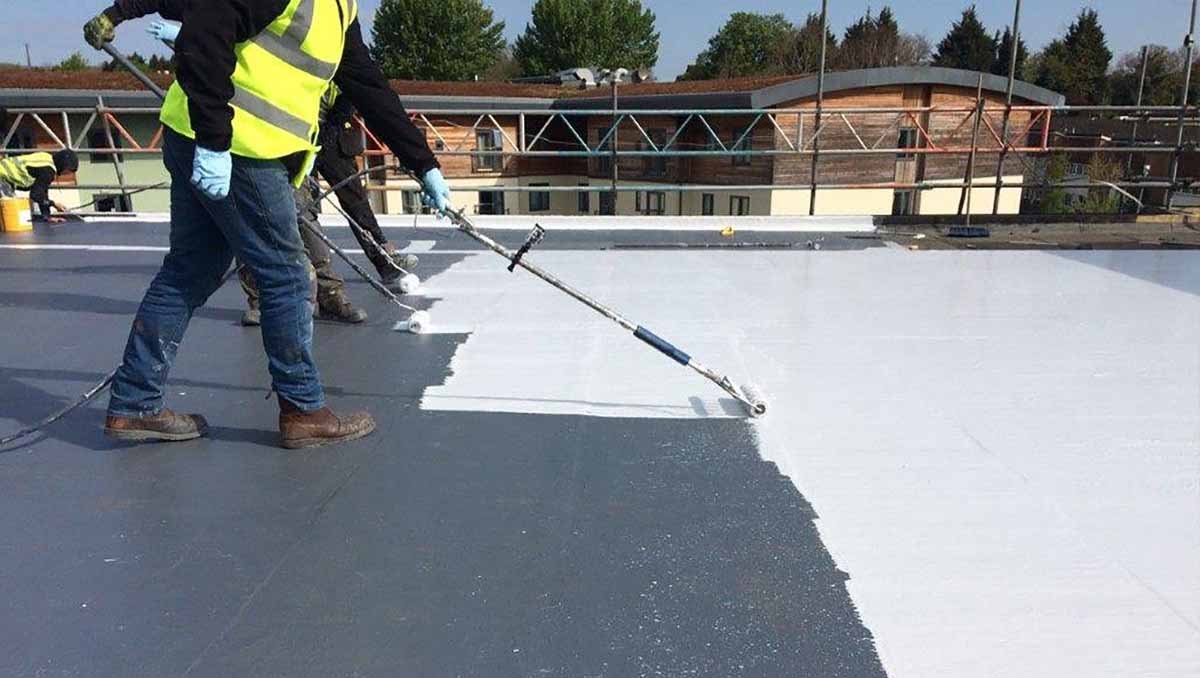
Alberta is punishing on any flat surface, so we select and apply every system for the local reality: deep freeze-thaw cycling, heavy UV, and water that pools and then freezes. Our residential roof waterproofing puts a membrane where a garage roof takes a beating, silicone where a low-lying pond forms, and reflective acrylic where summer heat is the enemy. Matching the system to real conditions is why our work holds up where a generic coating would crack or lift.
Manufacturer-Backed Systems
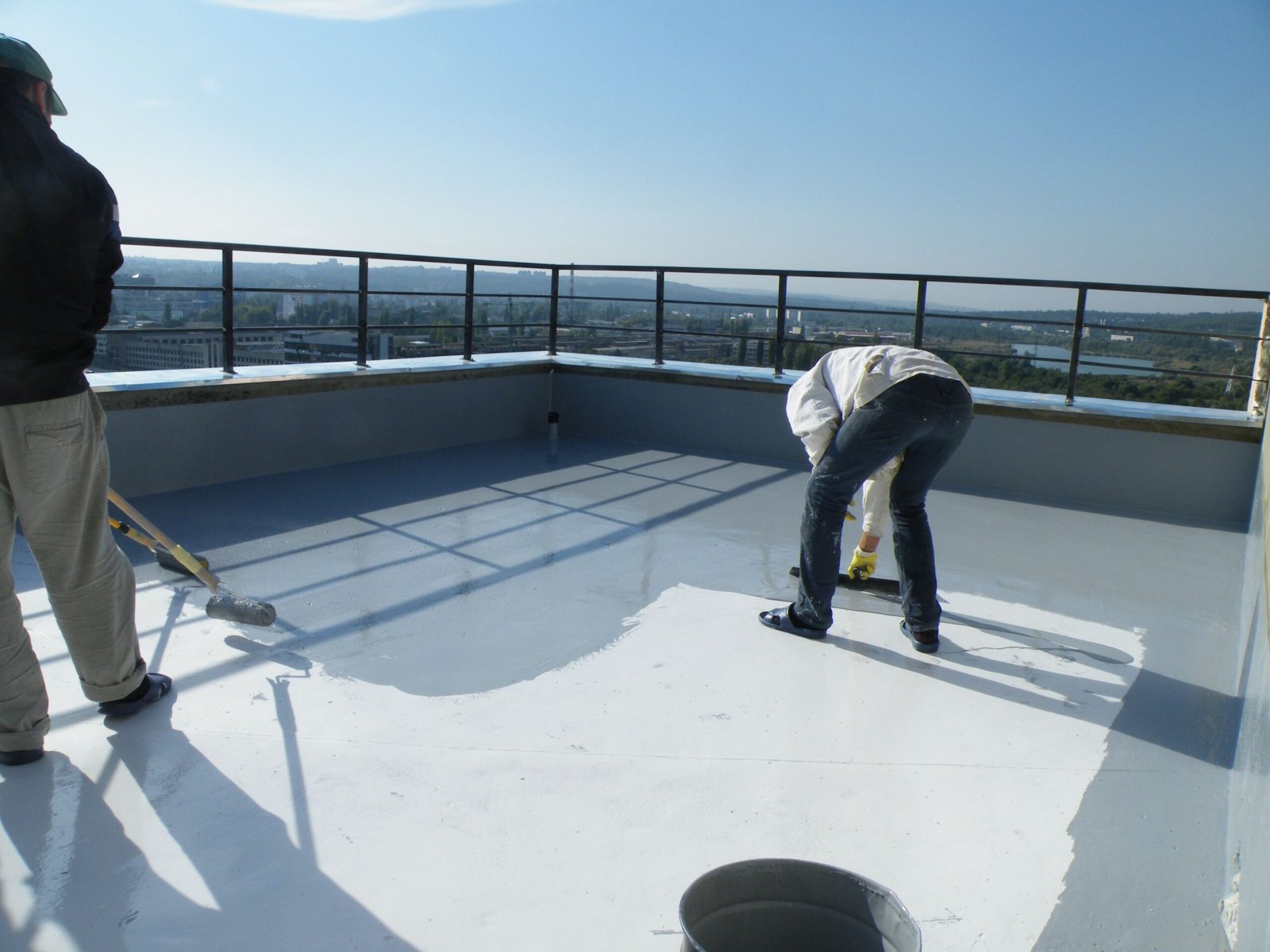
A manufacturer’s warranty on these systems only applies if a certified applicator installs them at the specified thickness, and that is exactly how ours go on. We work to spec, log the build-up, and register the system so the cover genuinely holds. That record earns its keep years down the line, when a claim turns on showing that the coating was applied as intended.