SBS Roofing System

Protect your property with the SBS Roofing System, built for flat and low-sloped roofs that need flexible waterproofing, durability, and weather resistance. Our expert team ensures reliable installation, helping your roof handle heat, rain, and daily wear with long-lasting performance.

An SBS Roofing System shields flat and low-slope commercial roofs with rubber-modified bitumen, an elastic membrane that flexes through Alberta’s temperature swings without cracking. Markit Roofing layers it in bonded plies for puncture resistance and lasting waterproofing.

SBS, short for styrene-butadiene-styrene, is a modified bitumen roofing system that adds synthetic rubber to traditional asphalt. The result is a membrane that behaves more like rubber than tar, stretching, recovering, and absorbing building movement rather than splitting under stress. We build SBS roofs with two or three bonded plies, so even if one layer is compromised, the system below keeps water out. For Calgary and Edmonton properties that face freeze-thaw cycles and heavy snow loads, that elasticity is a genuine advantage.

From the first site visit to the final flood test, our crews handle SBS work with the detailing it demands, relaxing the sheets, bonding the base plies, and finishing with a granulated cap that shrugs off UV. New build, re-roof, or repair, we focus on seams and flashings that hold, because that is where flat roofs usually fail.
SBS Roofing

What is an SBS Roofing System?

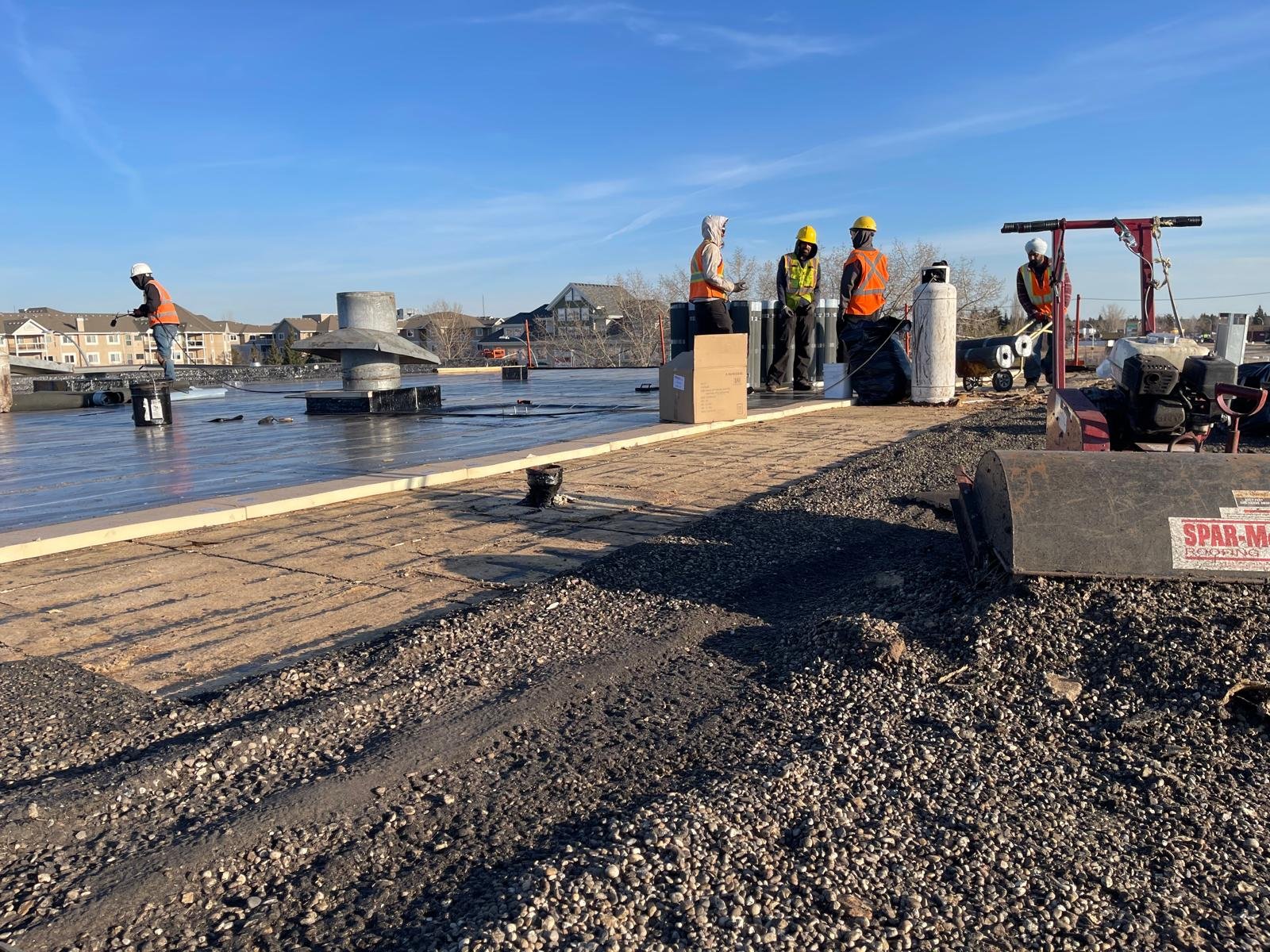
Think of SBS as asphalt that has learned to bend. By blending bitumen with styrene-butadiene-styrene rubber, manufacturers create a roofing membrane that remains pliable in deep cold and springs back after being stressed. It arrives in rolls and is installed across flat or low-slope commercial decks in stacked plies, typically a base sheet topped by a granule-surfaced cap sheet. Crews can melt the seams with a torch, set the sheets in cold adhesive, peel-and-stick a self-adhered version, or mop them down in hot asphalt, whichever suits the building and its occupants best.
What keeps SBS in demand is the balance it strikes. Building owners get the familiar, field-proven waterproofing of asphalt, plus rubber-like give that handles thermal shock, rooftop foot traffic, and the weight of pavers or mechanical units without fatiguing. That toughness is why facility managers across Alberta favour it for warehouses, retail boxes, and institutional roofs that see real wear. Installed correctly, an SBS roof returns 20 to 30 years of low-fuss performance, and when a repair is eventually needed, patching a bitumen membrane is quick and inexpensive.

Types of SBS Roofing System

There is no single way to lay an SBS roof. The plies can be heat-fused, glued cold, or floated in hot asphalt, and the cap sheet can be smooth or granulated, so the right build depends on the deck, the surrounding occupancy, the local fire code, and how quickly the building needs to reopen. The five approaches below cover most commercial situations our crews meet in Calgary and Edmonton.
Torch-down work delivers the strongest fused seams but calls for strict fire safety, while cold-adhesive and self-adhered builds skip the open flame, which suits occupied schools, offices, and hospitals. Hot-mopped systems lean on traditional built-up practice, and a granulated cap adds the reflective, abrasion-resistant top layer. Rather than guess, let our team match the method to your roof after walking it and reviewing how the building is used.

Our Process

Roof Inspection and Planning
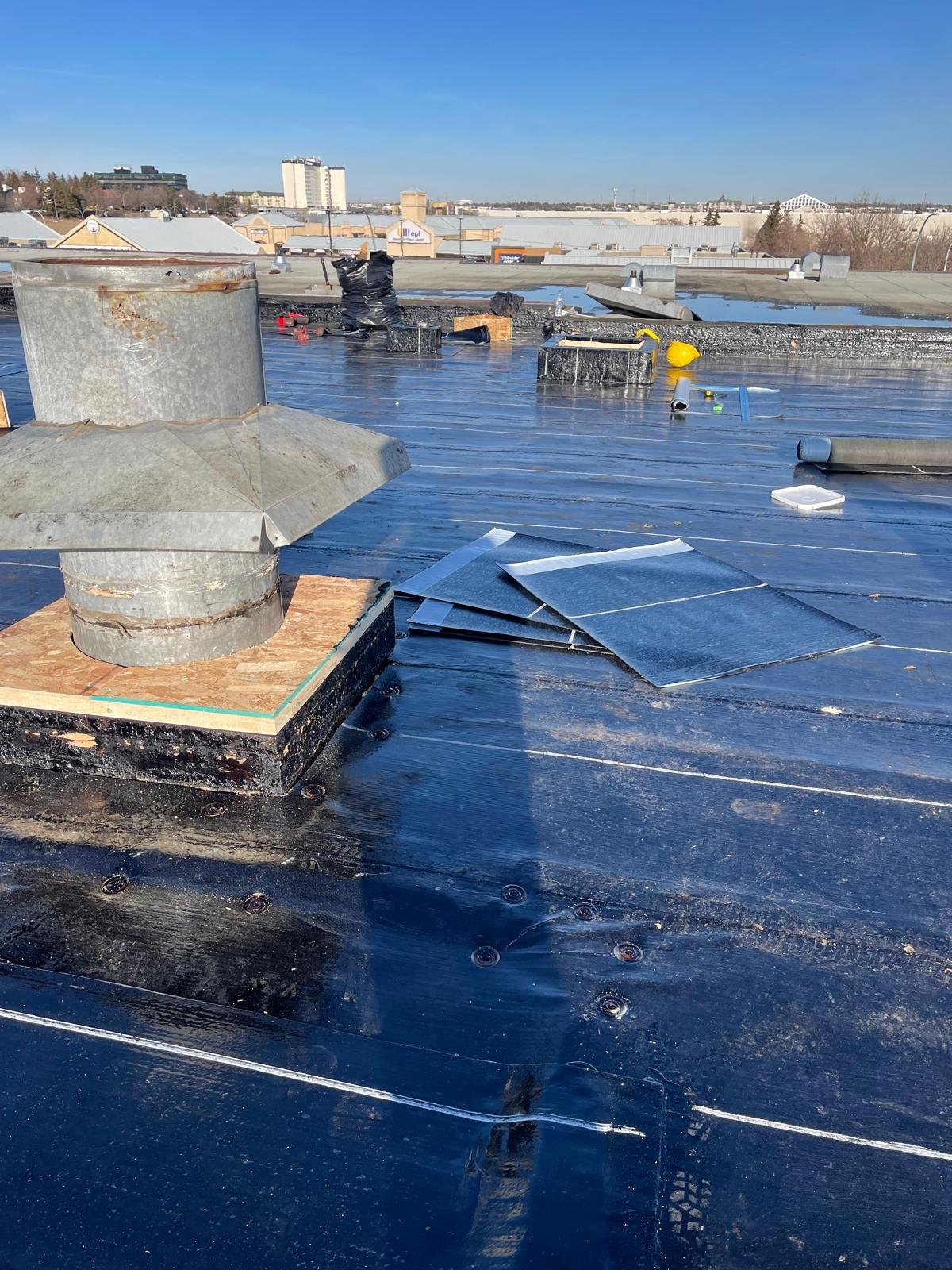
Every SBS project at Markit Roofing opens with boots on the roof, not a quote over the phone. We measure slope and drainage, probe the existing assembly for trapped moisture, and note the condition of flashings, curbs, drains, and parapet details. Just as important, we ask how the building is used, what the fire and access constraints are, and where the budget sits, because all of that steers whether torch, cold-adhesive, or self-adhered SBS is the smarter call.
 
Only once that picture is complete do we specify the number of plies, the attachment method, and the cap surfacing. Getting these decisions right at the start is what separates a roof that reaches its full service life from one that fails early at the seams.
SBS Roofing

Surface Preparation

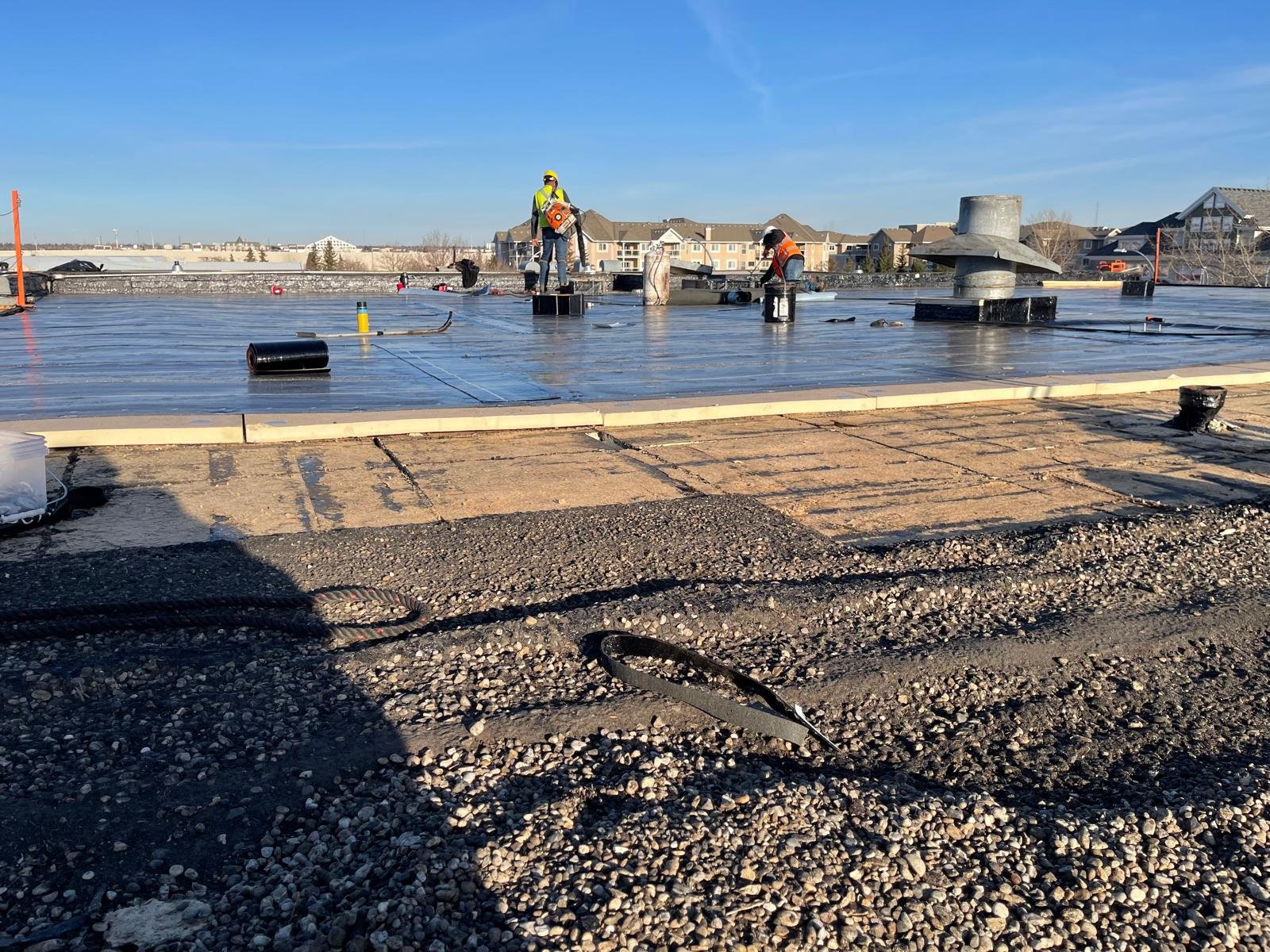
A modified bitumen roof is only as sound as what sits beneath it, so the substrate gets real attention. Depending on the assembly, that can mean stripping failed material, drying or replacing wet insulation, adding polyiso or a cover board for a smooth base, and tightening drainage so water never pools. The deck has to be clean, stable, and properly dry before the first ply ever goes down.
 
Cutting corners here is how blisters, ridging, and early leaks begin. Our crews take the time to build a flat, well-bonded base, which lets the SBS plies adhere fully and flex as intended once the roof is back in service through Alberta’s seasons.
SBS Roofing

SBS Membrane Installation and Review

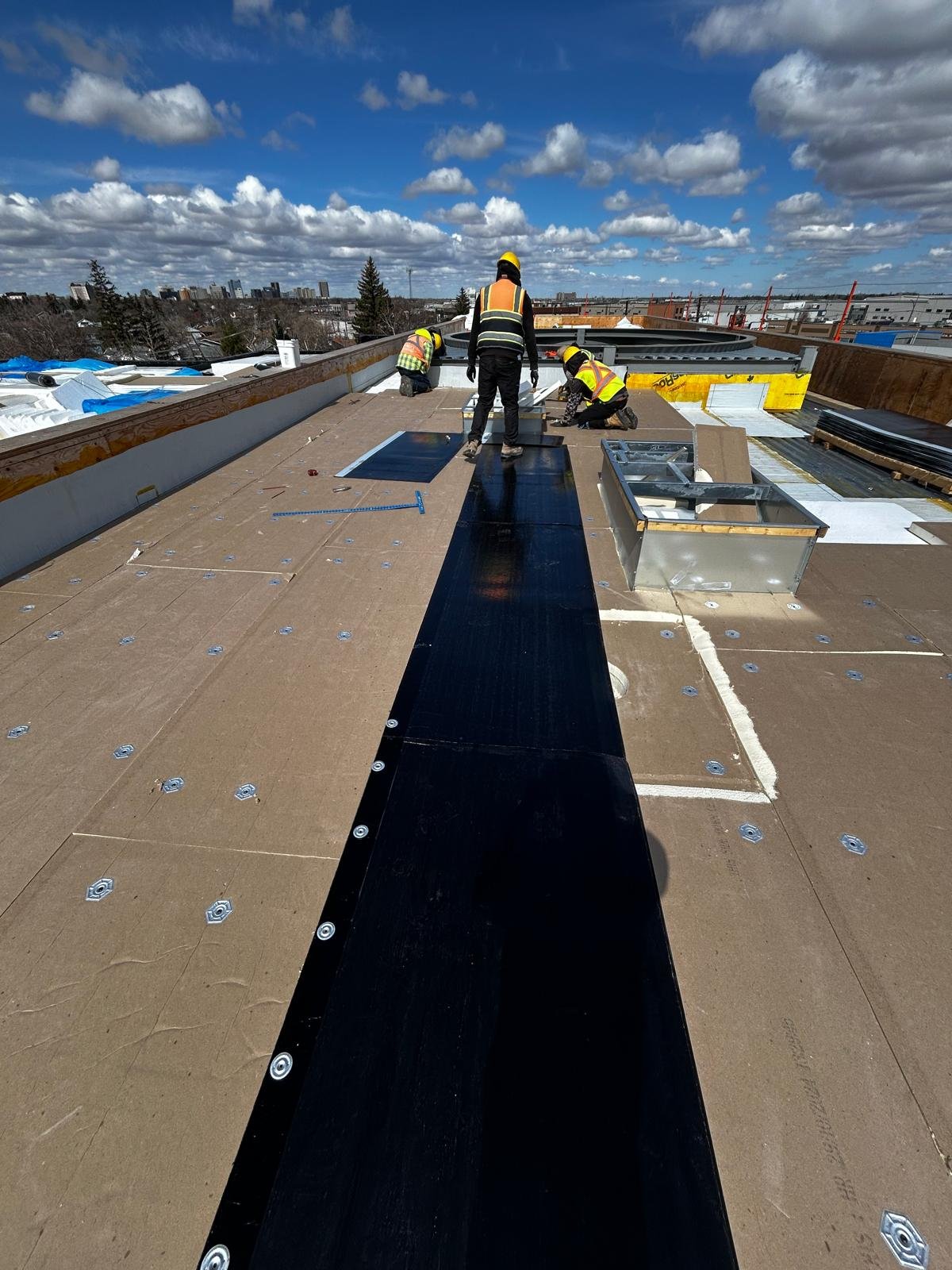
With the substrate ready, we roll out and relax the SBS sheets, then bond the base plies using the method chosen for the building before heat-welding or adhering the granulated cap on top. Seams are lapped and sealed, and every penetration, drain, and edge is flashed to move with the roof rather than tear against it. This is patient detail work, and it is where our crews earn their keep.
 
Before we leave, the roof is inspected and, where appropriate, flood-tested or seam-probed to confirm it is watertight. We then walk the owner through simple upkeep, so the finished SBS roof continues to perform with nothing more than routine seasonal checks.

Have a new roofing project?

What can you expect from us?

Hiring Markit Roofing for an SBS project means working with certified installers who treat modified bitumen as a craft, not a commodity. We show up on schedule, keep the site safe and the building running, and stand behind the finished roof with workmanship you can lean on. From the first walk-through to the closeout report, the aim is a flexible, watertight roof that earns its cost.

Durable

Stacked plies of rubber-modified asphalt give SBS strong resistance to punctures and impacts, and a properly built roof can last 20 to 30 years. Because the membrane remains elastic, it rides out freeze-thaw cycles rather than cracking.

Safe

Fused or adhered seams and a tough granulated surface let an SBS roof stand up to wind uplift, hail, and steady foot traffic. Careful flashing keeps water out at edges and penetrations, where leaks often begin.

Dependable

Because we install to certified procedures and inspect at every stage, an SBS roof from Markit performs predictably year after year, and the warranty behind it means support is there if you ever need it.

Frequently Asked Questions

With proper installation and light maintenance, most SBS roofs last 20 to 30 years, and the multi-ply build means a single damaged layer rarely ends the roof’s life.

SBS carries rubber polymers that stay flexible in the cold, so it tends to outperform the stiffer, plastic-based APP in Alberta’s climate, though APP can suit hotter, sun-baked roofs.

Yes. Its thickness and puncture resistance make it a common pick for roofs carrying pavers, walkways, HVAC units, or regular maintenance access.

Not at all. We also offer cold-adhesive, self-adhered, and hot-mopped options, which are helpful when open flames are restricted in an occupied building.

Very little. A couple of inspections a year, basic cleaning, and prompt attention to any small seam or flashing issue will keep it watertight for the long haul.

Book a Free Consultation