BUR Roofing System

Protect your property with the BUR Roofing System, built with multiple layers for strong waterproofing, durability, and weather resistance. Ideal for flat and low-slope roofs, it helps handle heat, rain, and daily exposure with reliable long-term protection.
Markit Roofing
Markit Roofing

A BUR Roofing System builds waterproofing in layers, alternating bitumen with reinforcing felts and finishing in gravel or a cap sheet. That redundancy makes built-up roofing one of the toughest, longest-serving flat-roof choices. Markit Roofing builds it to last.

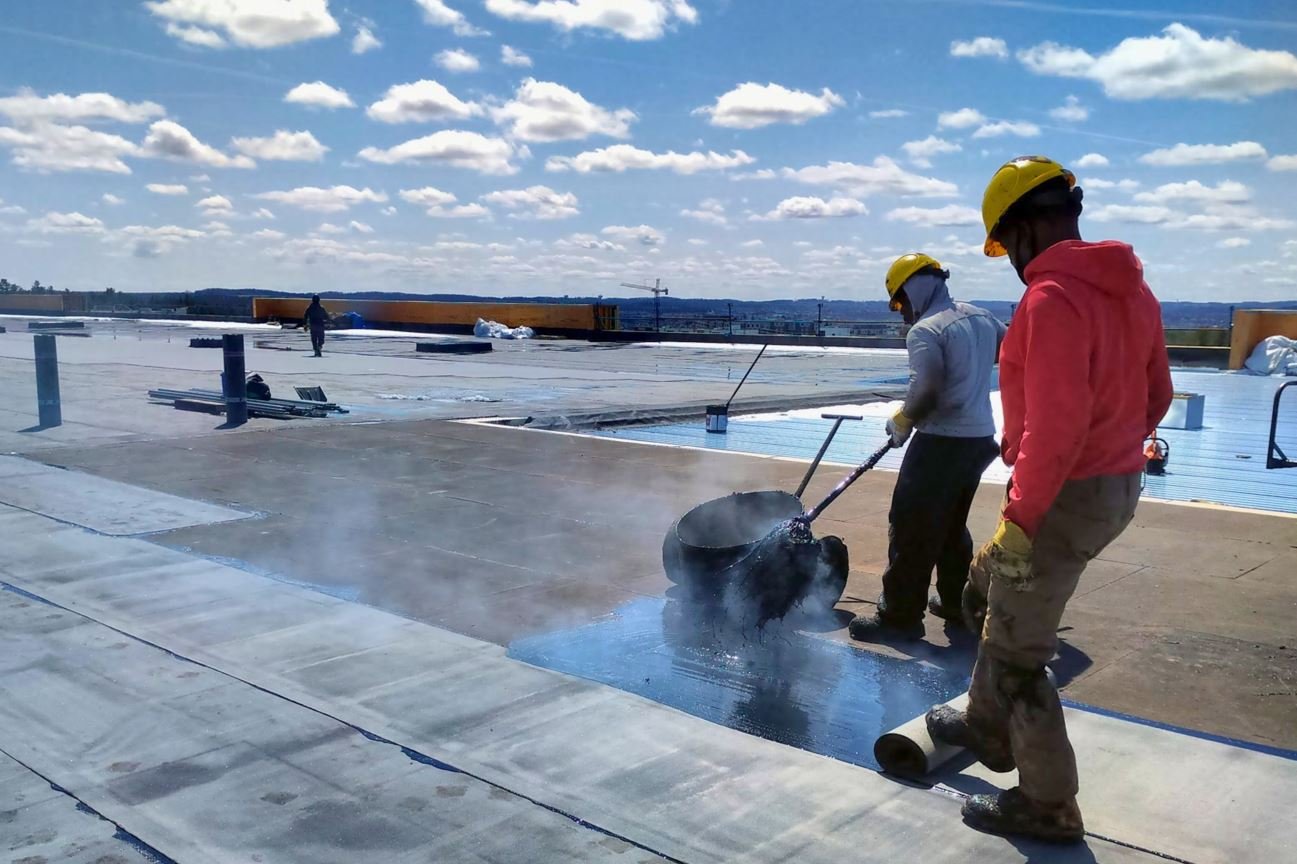
Built-up roofing, or BUR, is the original flat-roof system, proven over more than a century of use. Rather than a single sheet, a BUR roof is constructed on site from several alternating layers of hot or cold bitumen and reinforcing ply sheets, then topped with gravel, a mineral cap, or a reflective coating. Each layer adds another barrier against water, so wearing through one ply still leaves the ones beneath to keep the building dry. For owners who value proven, heavy-duty protection, few systems match it.

Markit Roofing builds BUR roofs for commercial, industrial, and institutional buildings throughout Calgary and Edmonton. We mop or adhere each ply, embed the surfacing that best suits the roof, and detail every drain, curb, and edge to prevent leaks. For new roofs or tear-off replacements, our crews deliver a thick, durable assembly designed for Alberta’s weather extremes.
BUR Roofing System​

What is a BUR Roofing System?

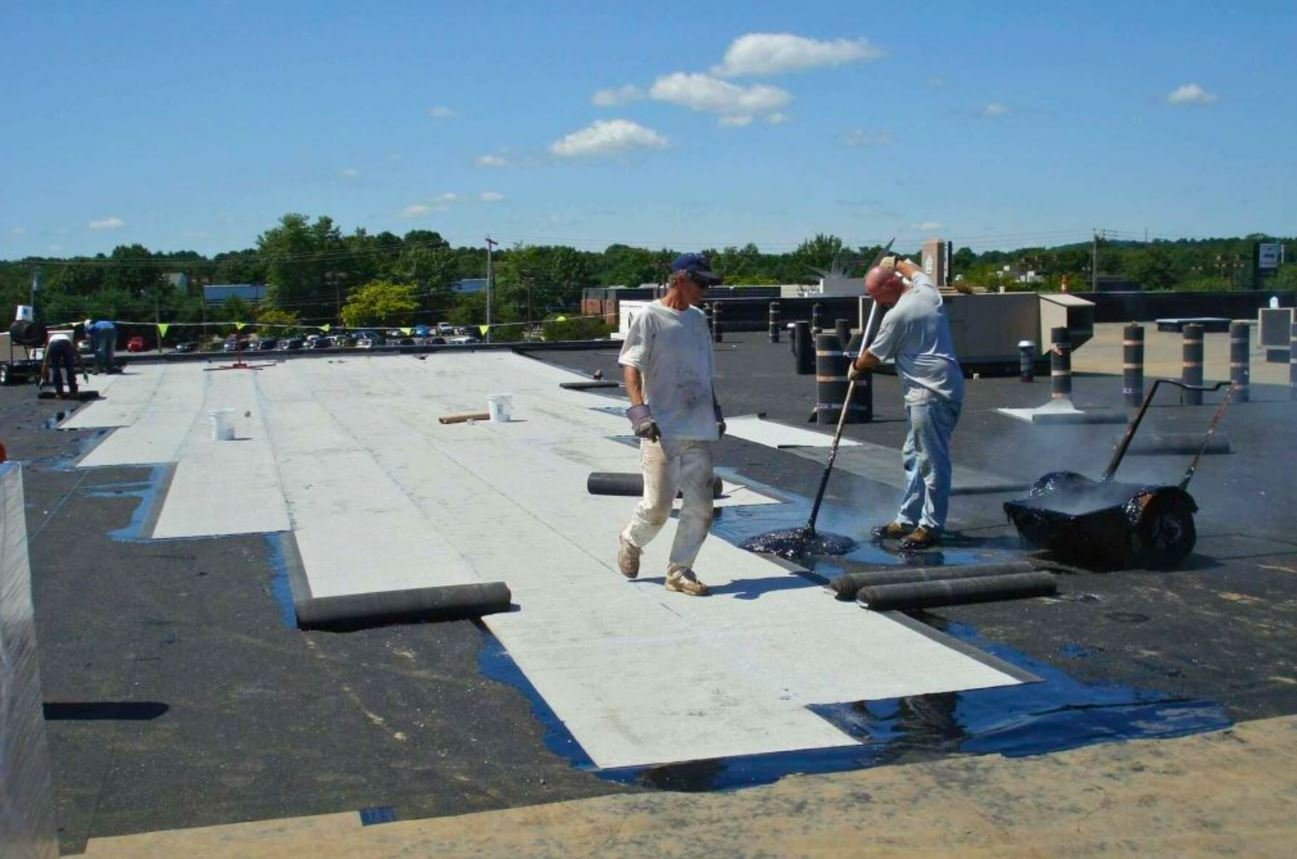
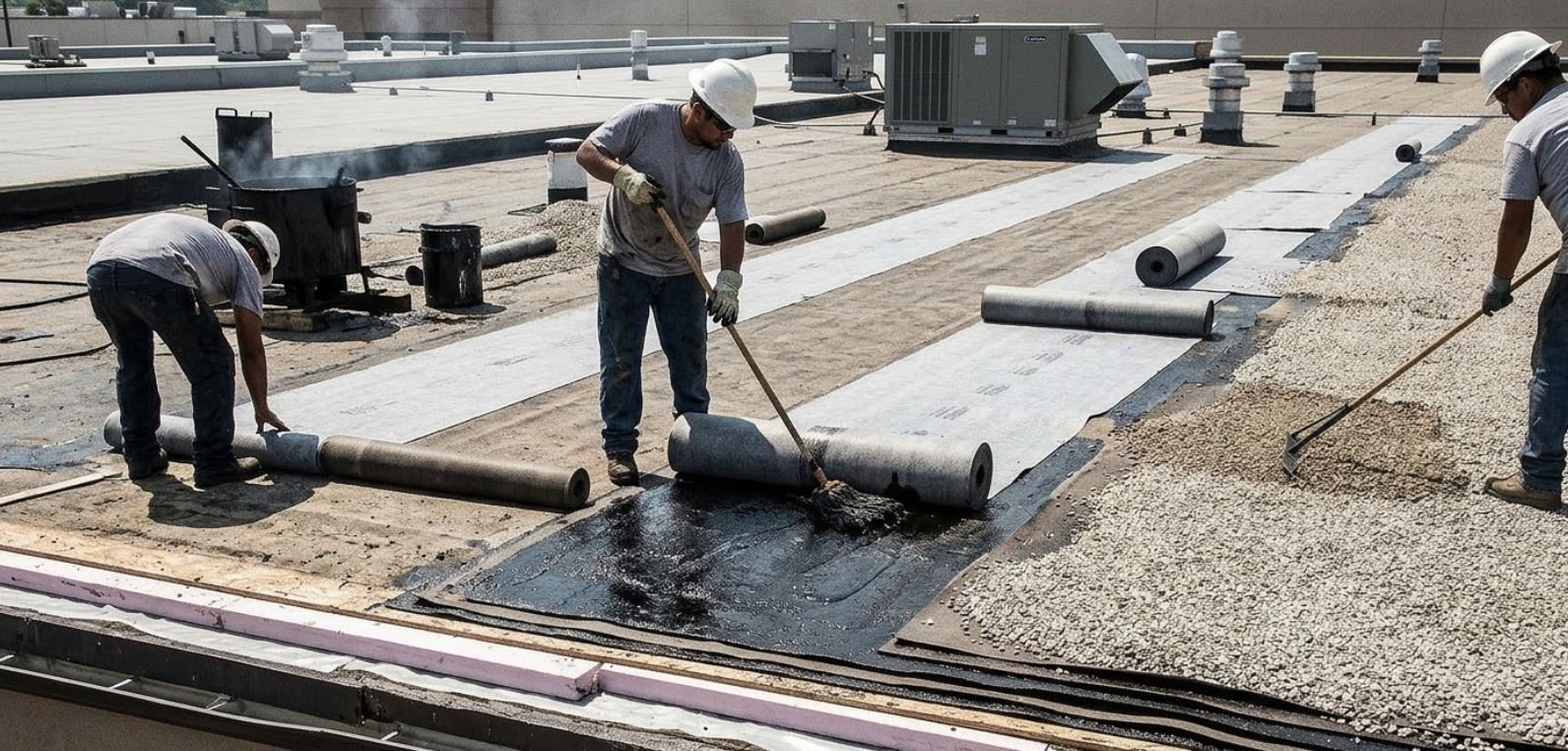
A BUR Roofing System, short for built-up roofing, is made by stacking several layers of bitumen and reinforcing fabric directly on the roof deck. Crews alternate mopped or cold-applied bitumen with ply sheets, layer after layer, until the assembly reaches the specified thickness, then finish it with embedded gravel, a granulated cap, or a coating. It is the classic flat-roof build, the tar-and-gravel roof many people picture, and it remains a go-to for low-slope commercial and industrial decks that demand serious, long-lasting waterproofing.
What sets BUR apart is sheer layered toughness. Because protection comes from several plies rather than one, a single nick or blister rarely threatens the whole roof, and the gravel surface shields the bitumen from the sun while shrugging off foot traffic and hail. Coal-tar versions even self-seal small punctures and excel on dead-level roofs that tend to pond. With proper drainage and routine care, a built-up roof typically lasts 20 to 40 years, which is why facility managers across Alberta still specify it for buildings that simply cannot leak. Hospitals, schools, and busy warehouses are typical candidates.

Types of BUR Roofing System

Built-up roofs are classified by the method of bitumen application and the surface finish. Some are mopped down with hot asphalt, others use cold adhesives that skip the kettle and its fumes, and the top layer might be loose gravel, a mineral cap, or a coal-tar surface chosen for ponding resistance. The best mix depends on the deck, the building’s use, local fire requirements, and the amount of rooftop traffic the roof will carry.
Hot-mopped asphalt remains the traditional workhorse for general waterproofing, while cold-applied builds suit occupied buildings where open flame and fumes are a concern. Coal-tar pitch handles standing water better than almost anything; gravel surfacing adds UV and fire protection, plus a walkable finish; and a mineral cap keeps the roof easy to inspect and recoat. We recommend the right combination after assessing your deck and the building’s use.

Our Process

BUR Roofing System​

Roof Inspection and Assessment

A BUR project starts with a close look at the deck and whatever roof is already on it. Drainage, slope, trapped moisture, and the condition of flashings, drains, curbs, and parapet walls all get recorded. Because built-up roofing is heavy and layered, we also confirm the structure can carry it and decide whether a repair, a recover, or a full tear-off and rebuild makes the most sense.
 
That assessment drives the specification: how many plies, which bitumen and application method, and what surfacing the roof should wear. Sorting this out before any material is ordered keeps the project on budget and gives the finished roof the best chance to perform as intended.
BUR Roofing System​

Surface Preparation

Once the approach is set, we ready the deck for a clean, well-bonded build. That can involve tearing off failed roofing, drying or replacing saturated insulation, fixing soft spots, and laying insulation or a base sheet so the first ply has a solid, even surface to grip. Drainage is corrected where needed, since a built-up roof rewards good slope and punishes standing water.
 
This groundwork is not glamorous, but it decides how well the plies bond and how long the roof lasts. Our crews take it seriously because a built-up assembly is only as reliable as the surface and base sheet that hold its layers together over the long run.
roofing company calgary

BUR Installation and Review

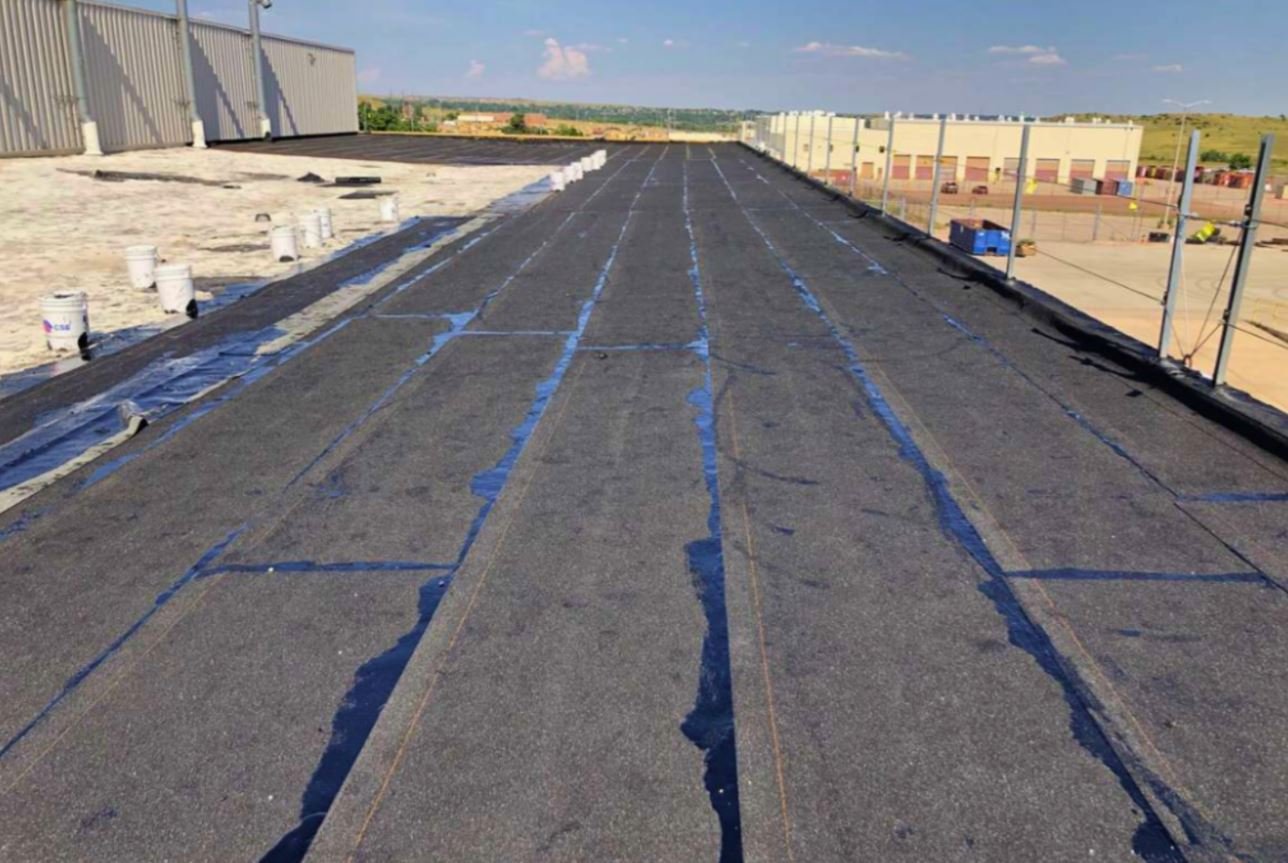
With the base ready, we build the roof up ply by ply, alternating bitumen with reinforcing sheets until the assembly reaches its designed thickness, then lock in the surfacing, whether that is flood-coat gravel, a mineral cap, or a coating. Flashings, drains, vents, and edges are layered and sealed with extra care, since these details are where flat roofs most often fail.
 
Before handover, we walk the entire roof, checking ply laps, surfacing coverage, and every termination, and we correct anything that is not right. You leave with clear maintenance pointers, because a few inspections and prompt small repairs keep a built-up roof watertight for decades.

Have a new roofing project?

What can you expect from Markit Roofing?

With Markit Roofing on your BUR project, you get a crew that knows built-up roofing inside out and installs it to code, ply by ply, without cutting corners. We keep the kettle area safe, the site tidy, and your operations running, and we stand behind the finished roof with materials and warranties you can count on. Every layer and detail is checked before we call the job done.

Durable

Several bonded plies and a gravel or cap surface give BUR exceptional resistance to punctures, hail, and UV, and a well-built roof regularly lasts 20 to 40 years. If one layer is damaged, the plies below continue to protect the building.

Safe

Gravel surfacing adds fire resistance and a stable, walkable surface, and our crews follow strict hot-work and safety practices around the kettle. The layered build also withstands Alberta wind and snow loads.

Dependable

We install built-up roofs in accordance with certified procedures, inspect every ply and detail, and back the finished roof with solid warranties, so your BUR roof keeps shedding water predictably for many years.

Frequently Asked Questions

With proper drainage and routine maintenance, a BUR roof typically lasts 20 to 40 years, thanks to its multiple plies and protective gravel or cap surface.

The gravel shields the bitumen from UV rays, adds fire resistance, holds the surface in place, and provides a tough, walkable finish that withstands foot traffic and hail.

Asphalt is the everyday choice for general waterproofing, while coal-tar pitch resists standing water much better, making it ideal for very low-slope roofs prone to ponding.

Yes, BUR is one of the heavier systems, so we confirm the structure can carry the added weight before specifying a full built-up assembly.

Often, yes. A sound built-up roof can be cleaned and recoated to extend its service life, at a cost far less than a full tear-off when the plies underneath are still solid.

Book a Free Consultation