
Commercial Roof Insurance Claims Assistance
A commercial roof claim needs clear evidence of the reported damage. Hail can leave damage that is not immediately obvious, so timely photographs and inspection findings help distinguish storm effects from existing wear. Markit Roofing provides the technical evidence a commercial roof insurance claim depends on, across Calgary and Edmonton.
Be clear about what this is. Our role is roofing assessment and documentation; we do not negotiate your settlement or act as your insurance adjuster. We inspect, photograph, measure, and write the technical report your adjuster needs, then carry out the approved work.
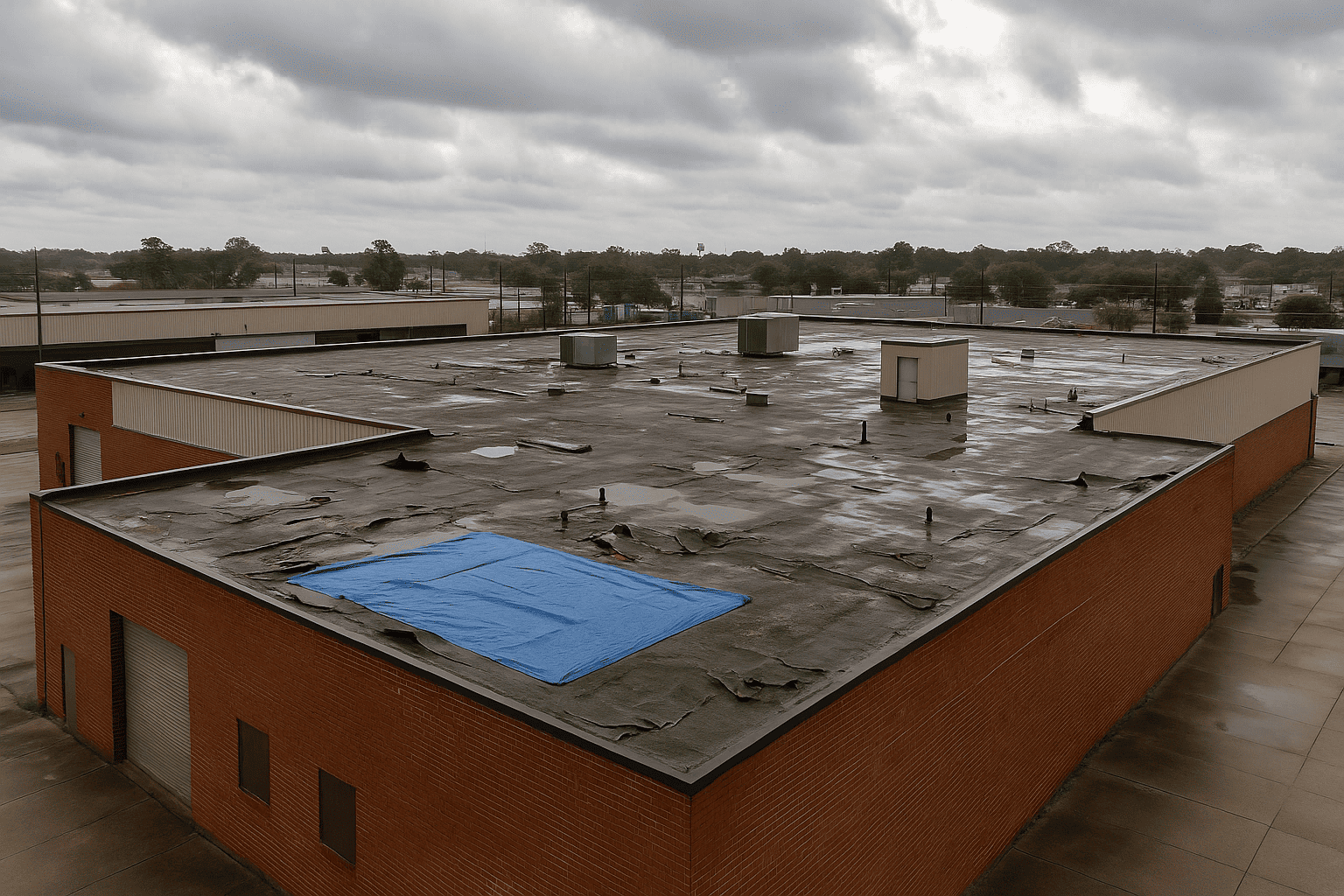
What Insurers Actually Need to See on a Roof
An adjuster’s site visit may not reveal every issue on a large flat roof. Clear documentation helps explain roof conditions, particularly during a busy post-storm period, and supports assessment of your commercial roof insurance claim. Coverage and settlement depend on your policy, the cause of damage, and the evidence available.
- Damage written off as wear
- No record of prior condition
- Scope misses hidden damage.
- Loss reported months later.
- Photos taken after repairs
These issues can complicate assessment and make clear documentation especially useful. A commercial roof inspection carried out before the adjuster attends gives you a written technical record, dated photographs, and moisture readings, so the conversation starts from evidence rather than from opinion.
Our Claim Documentation Process
Immediate Damage Documentation
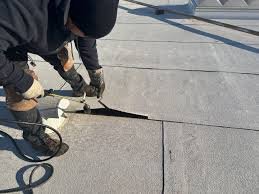
The first hours matter more than most owners expect. Where safe, photograph damage before temporary repairs, while prioritizing safety and prompt measures to prevent further loss. We document the roof in its failed state, with dates, locations, and scale references.
Making safe is not the same as repairing. Policies expect you to prevent further loss and to maintain evidence of the loss. We stabilize the roof during emergency repairs while leaving the damage recorded, to help preserve evidence while protecting your building.
Independent Roof Assessment
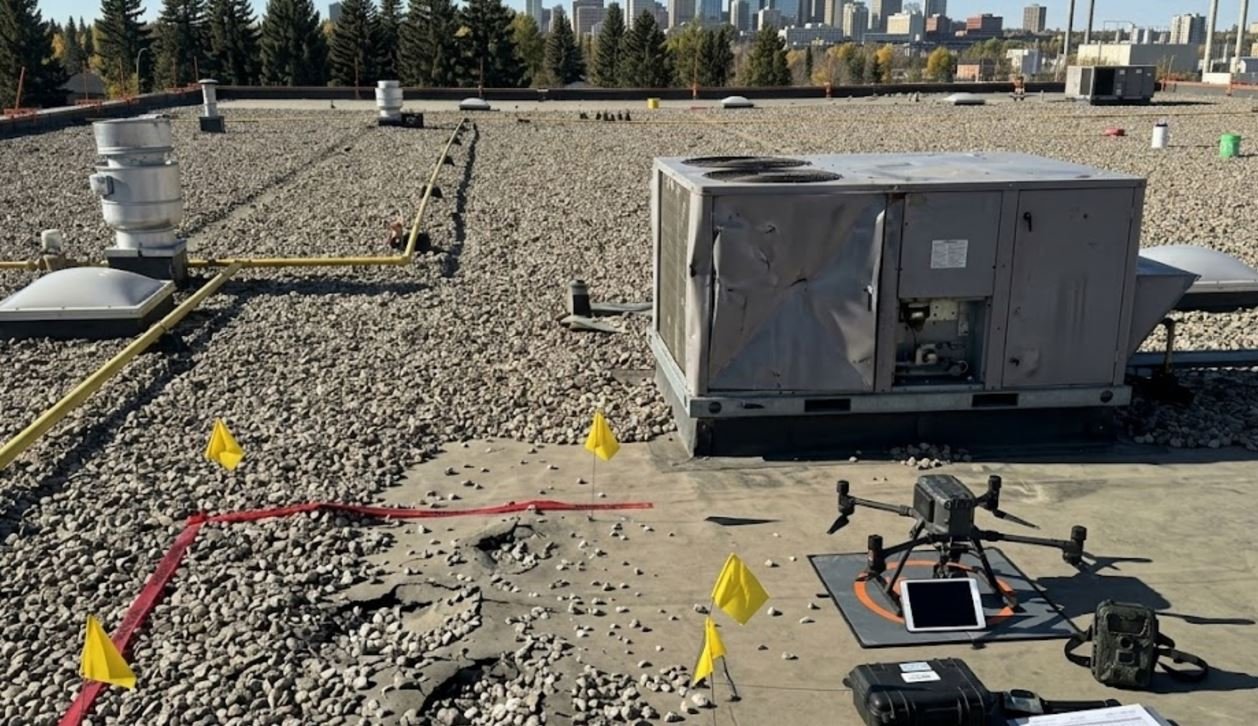
Next, we properly survey the roof to document its condition and visible damage. Our HAAG-certified inspectors assess storm damage and age-related wear, helping document whether observed conditions appear consistent with a storm, existing wear, or other causes.
Infrared scanning under ASTM C1153 helps locate suspected wet insulation; verification and further investigation are needed to identify the source. Distinguishing wet insulation from a stained ceiling tile helps inform the repair scope for your insurer’s review.
Meeting Your Adjuster On Site
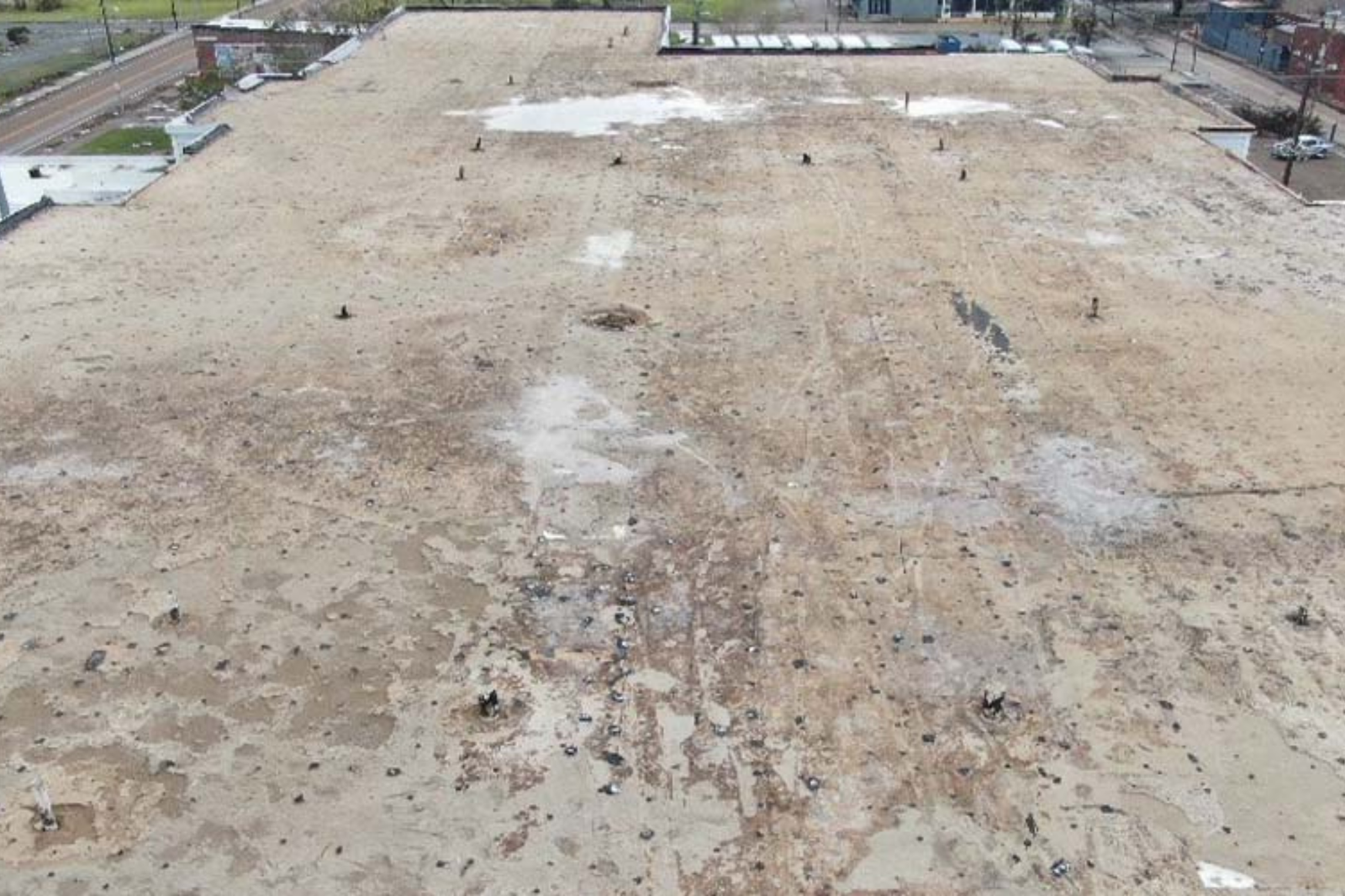
We then walk the roof with your adjuster rather than leaving them to it. Showing a bruise on a membrane is far more useful than describing it in a report, and questions get answered on the spot instead of turning into a week of correspondence.
Our role here is technical, not adversarial. We explain what we found, how we found it, and what the assembly needs. Your adjuster and your policy wording determine the coverage decision; the evidence they weigh is what we are responsible for accurately presenting to them.
Scope, Repair, and Final Paperwork
Finally, we write the scope: materials, areas, quantities, and the code requirements the repair must satisfy. A detailed scope helps your insurer assess proposed repairs, so ours is specific enough to work through line by line.
Understand how a commercial roof insurance claim pays out. Payment timing, depreciation, and any replacement-cost conditions depend on your policy. Wind and hail deductibles also vary, so confirm the amount and applicable terms with your insurer. Yours remains yours to pay: we never absorb or rebate a deductible, and all costs must be accurately disclosed to your insurer.


